The Capital of Bookcrossing


 20160528_111916 
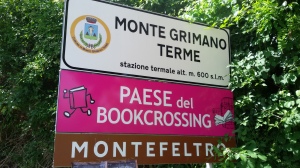
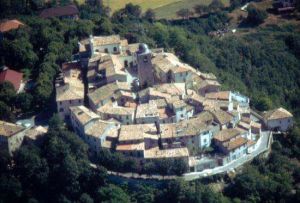
Monte Grimano Terme is a village in the Marches (Italy), which has had the excellent idea to set up permanent shelves of BookCrossing. Especially as you enter the village under the sign with the name of the town, there is also one what qualifies the village as “the town of the BookCrossing”.
The BookCrossing, a sociological phenomenon of global importance, is an original way to share books and encourage reading, and the small italian town has thought to present itself as the city-symbol of this practice.
 20160528_11263820160528_112652
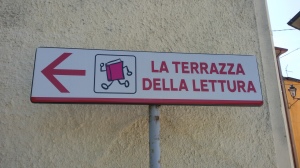
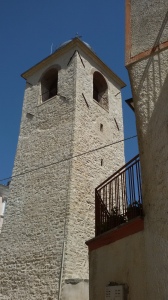
 In the village there is appropriate signs indicating the “tower of books”, and the “reading terrace”. The tower is a bell tower inside which are books on tables and shelves. The “reading terrace” is outdoors in a public park where there are tables and chairs painted with a pleasant fuchsia; in this area there is also an open shelf adequately protected from the weather (there are others shelves around the village)
 20160528_11313820160528_113347ninna-mgt
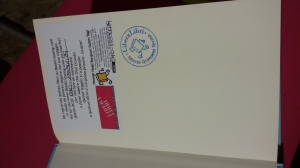
 The books are officially registered on the BookCrossing site with the appropriate label and also report a stamp of Monte Grimano Terme.
 20160528_113425
With an organization like this Monte Grimano Terme will certainly become the capital of BookCrossing, maybe not only for Italy!
 monte-grimano
To send books to Monte Grimano:
Comune di Monte Grimano Terme (paese del bookcrossing)
Piazza Matteotti 1 – 61010 Monte Grimano Terme (PU) – ITALY
*
SEE ALSO:


Comments

Popular posts from this blog

Reflexions on the Future of Contemporary Poetry

Can the Muse Sing Again? Poetry, as is well known, has now been the Cinderella of literature for several decades. The art of verse is essentially alien to the mindset of the contemporary reader, and poetry books have a completely negligible impact on the book market. Apparently, therefore, poetry seems confined to a narrow circle of insiders, or to a crowd of reckless amateurs who believe they are poets simply because they occasionally break lines when they write… But there are also those who wonder whether alternative horizons might exist for what was once the queen of literary expression. Among the voices proposing new ways of approaching the public, Ivan Pozzoni stands out for his originality. He has drafted an “Anti-Manifesto” of the “Neon-avant-garde” that offers plenty of stimuli for those who aspire to speak to the audience through renewed expressive modes. The key points of Pozzoni’s Manifesto are the following: – challenging nomadic capitalisms and multinational authorities...

Gorean Fiction: An Invitation to Rediscovery

Female acquiescence to submission is one of the most intriguing elements of the male/female relationship. This factor of romantic alchemy can manifest with various nuances and modalities, reaching as far as erotic fantasies of sexual dominance. Western culture itself debuts with the story of a master/slave relationship: Achilles and Briseis. In more recent times, women themselves have been able to describe this aspect of the couple's relationship, producing a 20th-century masterpiece like Pauline Réage’s Story of O , as well as a major pop success like E.L. James’s Fifty Shades of Grey . Even the Fantasy genre found an original interpreter of this narrative vein in John Norman, the American author who created the Gor saga. John Norman is actually the pseudonym used by John Frederick Lange Jr., who was a professor of philosophy at several American universities and who, alongside his academic career, developed successful lines of both fiction and non-fiction writing. The...

The Two Faces of Tolstoy

  Tolstoy: The Genius of War and Peace and the Moralist "Mess" Post- Anna Karenina ___________________________________ Leo Tolstoy is a writer whose greatness needs no introduction. The human condition is painted with extraordinary depth and power in War and Peace (1867). Contrary to what our contemporary image of Tolstoy might suggest, War and Peace is not a pacifist manifesto at all. The idle Russian bourgeoisie, immersed in balls, philosophical discussions, and socialites, is incapable of perceiving the gravity of the Napoleonic invasion; only the defeat and the horror of Austerlitz awaken the protagonists' humanity, allowing them to understand the meaning of existence (both individual and collective) in a Russia threatened by destruction. It is in this confrontation with necessity that Tolstoy is a genius: Napoleon is not an imaginary tyrant, but a man of flesh and blood; Russia is not a mere stage, it is life, it is the motherland. War is not a game, it i...